Why Is My Oven Not Heating Properly? Causes & Fixes
Learn why your oven won't heat and what to check first. Troubleshooting steps for electric and gas ovens, plus when to call a pro.

Your oven won't reach temperature, or it's heating unevenly and taking forever to preheat. If you're wondering why your oven is not heating properly, the answer usually comes down to a handful of common culprits: a burnt-out heating element, a faulty thermostat, a tripped circuit breaker, or (in gas ovens) a broken igniter or gas supply issue.
The good news is that some of these problems are quick to diagnose yourself. The better news is that many are fixable without calling in a professional right away. Let's walk through what's going wrong and what you can do about it.
Check the Power Supply First
Before you assume the oven itself is broken, make sure power is actually reaching it.
Walk over to your electrical panel and look for a tripped circuit breaker. If the switch for your oven circuit is flipped to the middle or "off" position, flip it back on. That's sometimes all it takes.
If the breaker trips again immediately after you reset it, stop there. A repeatedly tripping breaker signals a short circuit or electrical fault inside the oven, and you'll need a licensed electrician to diagnose it safely.
For gas ovens, make sure the gas valve is open (usually a small knob near the gas line connection). If it's perpendicular to the pipe, it's closed. Turn it parallel to the pipe to open it.
Inspect the Heating Elements (Electric Ovens)
If your oven is electric and power is on, the heating elements are the first place to look.
Open the oven door and look at both the upper and lower elements. A working element should be smooth and silvery. If you see bubbling, blistering, or dark burn marks across the surface, the element has failed and won't heat anymore.
Here's a quick test: set the oven to 450°F and wait about 5 minutes. A working lower element should glow bright red within that time. If it doesn't glow at all, or glows weakly in one spot, it's toast.
A burnt-out heating element is the single most common reason an oven stops heating properly, and replacement is straightforward. Most elements slide or bolt out of the back wall of the oven, and new ones cost far less than a service call. If you're not comfortable doing it yourself, a technician can swap one in less than an hour.
Related: Why Is My Dryer Not Heating? Common Causes & Fixes
Related: Why Is My Dishwasher Not Draining? Common Causes & Fixes
Test the Thermostat and Temperature Sensor
If the heating elements look fine and are glowing, but your oven still won't reach the right temperature, the thermostat or temperature sensor may be the problem.
The sensor (also called a thermistor) is usually a thin metal probe sticking into the oven cavity from the back or side wall. If it's touching the oven wall or is visibly dirty or corroded, that can throw off temperature readings.
Gently pull the sensor out and wipe it clean with a soft, dry cloth. Don't use water or solvents. Reinsert it and test the oven again.
If the sensor looks fine and cleaning doesn't help, the thermostat itself may have drifted out of calibration or failed internally. Unfortunately, thermostats usually can't be repaired or recalibrated at home. You'll likely need a replacement.
What's Wrong With Gas Ovens
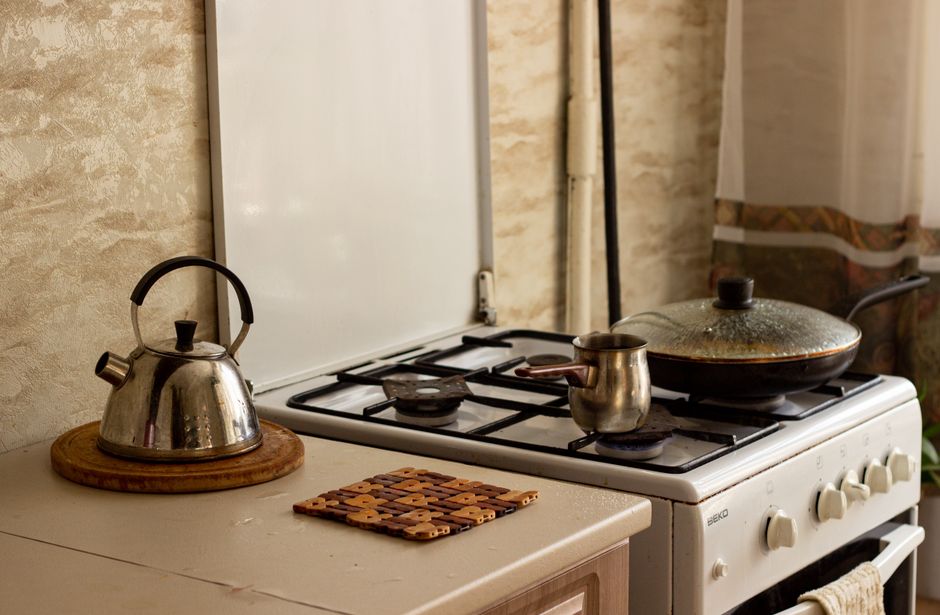
Gas ovens heat differently, so the failure points are different.
Instead of a heating element, a gas oven has an igniter (a glow plug or spark plug that lights the gas). When you turn on the oven, the igniter should heat up and light the gas burner. If the igniter is weak or dead, the gas won't light and the oven won't heat.
You can't always see an igniter failure just by looking, but signs include: the oven takes much longer than usual to light, you smell gas but don't hear the burner click on, or you see a spark but no flame.
Gas ovens also have a thermostat that controls the burner. If the thermostat fails, the oven may overheat, underheat, or not heat at all.
For gas-related problems, don't fiddle with the gas line yourself.Gas work is serious.
Oven Thermostat Accuracy and Calibration
Even if your oven heats, it might be off by 10, 20, or even 50 degrees. That's not always a broken thermostat. Older ovens naturally drift.
Use a separate oven thermometer (a cheap dial or digital thermometer you place inside the oven) to check. Set the oven to 350°F and let it preheat for 15 minutes. Then compare the thermometer reading to what the oven display says.
If the thermometer reads lower, your oven is underheating. If it reads higher, your oven is overheating. A drift of plus or minus 15 degrees is normal and won't ruin most recipes.
Some ovens have a calibration function in the control panel. Check your owner's manual to see if yours does. If it does, you may be able to adjust it yourself without any tools.
When to Call a Professional
You can safely replace a heating element or test a sensor yourself. But some oven problems require a trained eye.
Call a licensed appliance technician if:
- Your circuit breaker keeps tripping when the oven is on
- You smell gas but can't find a leak, or the oven won't light at all (gas ovens)
- The oven overheats no matter what, or temperature swings wildly
- You've ruled out the obvious stuff and the oven still won't heat
A service call typically runs between $100 and $300 for diagnosis and a basic repair, though costs vary by region and the complexity of the job. Replacement parts (elements, thermostats, igniters) may add $50 to $300 more depending on the brand and part.
For major issues or older ovens, it's worth getting a quote for repair versus replacement before you commit to either path.
Quick Troubleshooting Checklist

Before you grab your phone, run through this fast:
- Is the oven plugged in and the circuit breaker on?
- Are both heating elements glowing bright red when set to high heat?
- Does the oven take an unusually long time to preheat?
- Is the temperature sensor clean and seated properly?
- Does an independent thermometer match the display temperature?
- Is the oven door sealing properly? (A loose seal lets heat escape.)
If you get yes answers to most of these, your oven is probably working as designed. If you get no answers, you've found the weak link.
Common questions
Yes. Most electric oven heating elements simply slide out of the back of the oven or are held by one or two bolts. It's a 10-minute job once you buy the replacement part (usually $30 to $100). Unplug the oven first. If you're unsure about the installation, a technician can do it in under an hour for a service fee.
A slow preheat usually means a weak heating element, a dirty or misaligned temperature sensor, or a thermostat that's drifting. It can also mean the oven door isn't sealing properly, so heat is leaking out. Check the rubber gasket around the door for cracks or gaps.
It depends. If one area of the oven is much hotter than another, your food won't cook evenly, but there's no safety issue if the oven isn't leaking gas or overheating dangerously. You can rotate pans halfway through cooking to compensate. However, if the oven is significantly hotter than you set it and won't cool down, stop using it until a technician checks it.
This is usually a dead heating element (electric) or a failed igniter (gas). Less commonly, it's a broken thermostat or a control board failure. Start with the visual checks: look at the elements or listen for the igniter click. If you're confident those are working, a technician will need to test the thermostat and electrical circuits to pinpoint the issue.