Why Is My Dishwasher Not Draining? Common Causes & Fixes
Standing water in your dishwasher? Learn the top causes—clogged filter, kinked hose, blocked drain—and how to fix them yourself or know when to call a pro.
A dishwasher that won't drain is one of those problems that feels urgent but usually has a simple fix. Standing water pooling at the bottom of your machine after a cycle is done means something is blocking the path water needs to take to leave the dishwasher and head out to your home's main drain line. The good news: most of the time, you can figure out what's wrong and solve it yourself without calling anyone.
Here's the reality: your dishwasher has multiple checkpoints where water can get stuck. It flows from the wash jets, collects debris in a filter, moves through a pump, travels down a drain hose, and finally exits through your garbage disposal or straight into your drain line. If any of those steps get blocked, water stays put. Let's walk through the most common culprits and what to do about each one.
Related: Why Is My Refrigerator Not Cooling? Common Causes & Fixes
Related: Why Is My Dryer Not Heating? Common Causes & Fixes
Related: Why Is My Garage Door So Loud? Common Causes & Fixes
Related: Why Do My Lights Keep Flickering? Common Causes & Fixes
Related: Why Is My AC Not Cooling? Common Causes & Fixes
Check the Dishwasher Filter First
The filter is your first stop. This is the part that catches food scraps and keeps them from clogging up the pump and drain line. Over time, it fills up, and if water can't get past it, drainage stops.
Here's how to find and clean it:
- Open your dishwasher and remove the bottom rack.
- Look at the floor of the tub. You'll see a cylindrical or basket-shaped piece, usually at the back. That's your filter.
- Twist it counterclockwise (most models) or lift it straight up to remove it.
- Rinse it under warm running water. Use a soft brush or old toothbrush to scrub away stuck-on food and gunk.
- If it's really grimy, soak it in warm water for 10 minutes, then scrub again.
- Rinse thoroughly and slide it back in, twisting clockwise to lock it.
Run a short cycle to see if water drains now. Nine times out of ten, a clean filter solves the problem. If you're not sure whether your dishwasher has a removable filter or what kind you have, check the manufacturer's manual or search your model number online.
If the filter looks fine and water still isn't draining, move on to the next step.
Inspect the Drain Hose
The drain hose is the rubber tube that carries water out of your dishwasher. It can kink, twist, or get clogged, and any of those problems will stop drainage cold.
First, safety: turn off power to the dishwasher at the breaker before you do anything. Then pull the dishwasher out from under the counter so you can see the back.
Look for the hose that runs from the bottom back corner of the machine to wherever it connects (either to your garbage disposal or directly to the drain line under the sink).
- Check for obvious kinks or sharp bends. If the hose is folded or twisted, straighten it out.
- Feel along the length of it. Does it feel hard and brittle, or is it soft and flexible? If it's cracked or feels weak, the hose may need replacing.
- Look for standing water inside the hose. If there's a lot of water trapped in there, the hose is probably clogged.
- Disconnect the hose at both ends (have towels ready—water will spill out). Look through it toward a light source. Can you see daylight on the other end? If not, something is blocking it.
- Run water through the hose over a sink to flush out debris. If it won't flow, try a plumbing snake or a length of stiff wire to break up the clog.
Also check that the hose wasn't installed with a loop that's too tight or bent in a way that traps water. The hose should have a gentle curve or loop (to prevent siphoning) but nothing that kinks it shut.
Once you've cleaned or straightened the hose, reconnect it firmly and test the dishwasher again.
Look at the Drain Pump and Intake Area
Your dishwasher has a pump that pushes water out. Just before the pump sits a small intake area where water enters to be pumped out. Both places can collect debris.
With the dishwasher still unplugged and the bottom rack removed:
- Look at the bottom of the tub near where the filter sits. You might see small drain holes or an opening.
- Shine a flashlight down there. Look for bits of food, plastic, glass, or anything else blocking the opening.
- Use a small brush, cloth, or your fingers to carefully pull out any debris.
- Don't force anything or poke blindly—you can damage the pump.
If you see water but can't find an obvious clog, and you're not comfortable going further, that's the right time to call a plumber. Pump problems sometimes need a professional to diagnose.
Check Your Garbage Disposal Connection
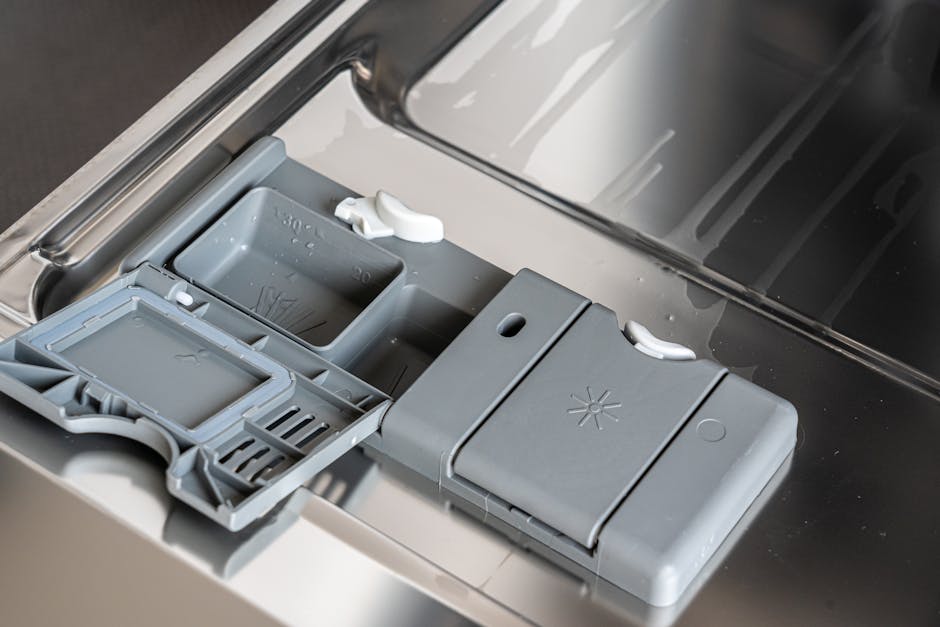
If your dishwasher drain hose connects to your garbage disposal instead of running straight to the drain line, a clogged disposal will back up water into the dishwasher.
First, make sure the garbage disposal is off and can't be turned on accidentally. Then:
- Look down into the disposal. Is there standing water? Lots of stuck food? That's your problem.
- You can try running the disposal (carefully, with the dishwasher drain disconnected temporarily if you're comfortable doing that). Let it clear out any blockage.
- If the disposal itself is jammed and won't run, it may need to be cleared or replaced. That's a job for a plumber or electrician.
Once the disposal is clear, reconnect the drain hose and test your dishwasher. Water should drain normally now.
When Water Still Won't Drain
If you've cleaned the filter, straightened the hose, cleared the pump intake, and checked the disposal, and your dishwasher still isn't draining, one of a few things may be happening:
- The drain line under your sink (the P-trap or main branch) is clogged. Water from the dishwasher can't get through because the whole drain system is backed up.
- The pump itself has failed and isn't pushing water out.
- There's an internal blockage deeper in the machine that you can't easily access.
At this point, you should call a plumber. They have tools and knowledge to diagnose whether the problem is your home's drain system or the dishwasher itself. Trying to fix it further on your own risks damaging the machine.
How to Stop Standing Water Safely
If there's a lot of water sitting in the bottom of your dishwasher, don't just let it sit there. It will start to smell, and the longer it sits, the more likely mold and bacteria will grow.
Turn off the dishwasher right away. Most models have a cancel button you can press and hold for a few seconds to stop the cycle mid-run.
Once the cycle has stopped, you need to remove the standing water before you start troubleshooting. Use a small cup or sponge to bail the water out into a sink. It's not glamorous, but it's safe and effective. Some people use a wet-dry shop vacuum, but be careful with those around electrical components.
Once the tub is dry, you can start checking the filter and hose.
Prevention Going Forward
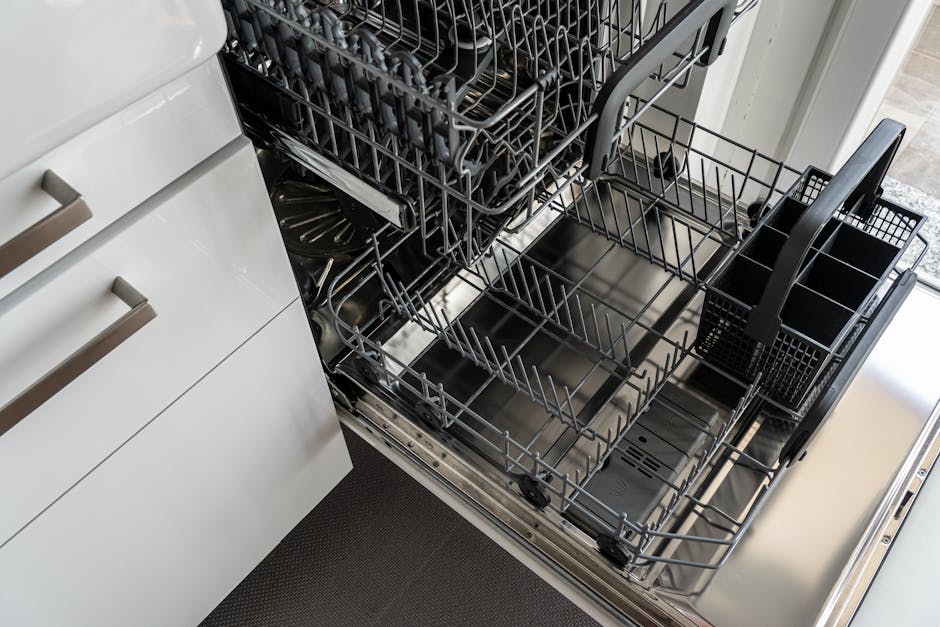
You can reduce the odds of a drainage problem happening again by scraping food off dishes before loading them, running the dishwasher regularly (standing water and stagnant traps are a breeding ground for problems), and checking the filter every month or two, especially if you use the dishwasher daily.
If you live somewhere with hard water, mineral buildup can sometimes clog the small drain holes on your pump or spray arms. Occasionally running a dishwasher cleaner (a product designed to descale the inside of the machine) can help prevent that.
Most drainage issues are preventable with basic maintenance. A clogged filter is almost always the culprit, and cleaning it takes five minutes. Keep that habit, and you'll avoid many headaches down the road.
Common questions
No. Chemical drain cleaners are designed for pipes and can damage the rubber seals, plastic parts, and pump inside your dishwasher. Stick to mechanical methods: cleaning the filter, flushing the hose, and removing debris by hand. If you need to clear a clog in the drain line itself (under the sink), you can use drain cleaner there, but keep it away from the dishwasher.
No. Running a cycle when water can't drain will only make the problem worse. It fills the tub with more standing water and gives debris time to pack down and harden. Always stop the cycle, remove the standing water, and diagnose the problem before running it again.
If you can fix it yourself by cleaning the filter or hose, the cost is zero. If you need a plumber to diagnose and repair the problem, expect to pay anywhere from around $150 to $400 for a service call and labor, depending on where you live, the time of day, and what needs to be fixed. If the pump has failed and needs replacement, parts and labor together typically run higher. Always get a quote before agreeing to work.
If your dishwasher is still covered by the manufacturer's warranty, contact the maker before you call a plumber. Many warranties cover mechanical failures (like a bad pump) but not clogs caused by user issues (like a dirty filter). Check your paperwork or search your model number online to find the warranty terms and the manufacturer's customer service number. According to resources from the Consumer Reports, most dishwashers come with a one-year parts warranty, though coverage varies by brand and model.