Why Is My Dishwasher Leaving Dishes Dirty
Dirty dishes after a cycle? Learn the real reasons—clogged filters, hard water, wrong detergent, blocked spray arms—and how to fix them.

Your dishwasher should come out sparkling clean every time. If it's leaving dishes dirty, spotted, or greasy after a full cycle, something in the machine is not working the way it should. The good news is that most causes are easy to spot and fix yourself—no repair person needed in many cases.
Here's what's probably happening and how to get your dishes clean again.
Related: Why Is My Dishwasher Not Draining? Common Causes & Fixes
Start With the Filter and Spray Arms
The most common reason dishes come out dirty is a clogged filter or blocked spray arms. Both of these keep water from reaching your dishes.
Open your dishwasher and look at the bottom. You'll see a cylindrical filter cup that twists out. Food particles, grease, and soap scum build up in there over time, and when it's clogged, water can't flow properly. Pull it out and rinse it under hot running water. Use an old toothbrush to scrub away stubborn gunk. Do this once a week, or more often if your dishwasher runs frequently.
Next, check the spray arms. These are the rotating parts that shoot water onto your dishes. Look for small holes along the arms. If they're blocked with mineral deposits or food debris, water won't spray where it needs to. Pop the spray arms out (they usually just pull or unscrew) and rinse them thoroughly. Use a toothpick or small wire to clear any holes that look plugged. This alone fixes the problem for many people.
Check Your Detergent Amount and Type
Using too much detergent is one of the biggest mistakes. More soap doesn't mean cleaner dishes—it actually does the opposite. Excess detergent leaves a film on dishes and can gum up your spray arms and filter.
Check your dishwasher's manual for the recommended amount based on your water hardness and the detergent brand you use. If you don't have the manual, most manufacturers suggest filling the detergent dispenser only three-quarters full for normal loads.
Hard water is also a common culprit. If you have hard water—meaning it has high levels of minerals like calcium and magnesium—those minerals can interfere with how detergent works and leave a cloudy residue on dishes. You can test your water hardness with an inexpensive test strip from a hardware store. If you have hard water, you have a few options: switch to a detergent designed for hard water, use less detergent than recommended, or consider adding a commercial rinse aid to your dishwasher. Rinse aid helps water flow off dishes and prevents mineral spotting.
Clean Inside the Machine Itself
Over time, your dishwasher's interior collects grease, soap residue, and mineral buildup. This buildup can prevent water from circulating properly and leave a film on everything inside.
Run an empty cycle with white vinegar to clean it. Pour two cups of white vinegar into a bowl and place it on the upper rack. Run a hot water cycle (no dishes, no detergent). The vinegar dissolves mineral deposits and breaks down grease. Do this monthly, especially if you have hard water or run your dishwasher daily.
You can also buy commercial dishwasher cleaners that are designed to remove buildup. Follow the product instructions—they're usually just as easy as the vinegar method.
Look at How You Load Your Dishwasher
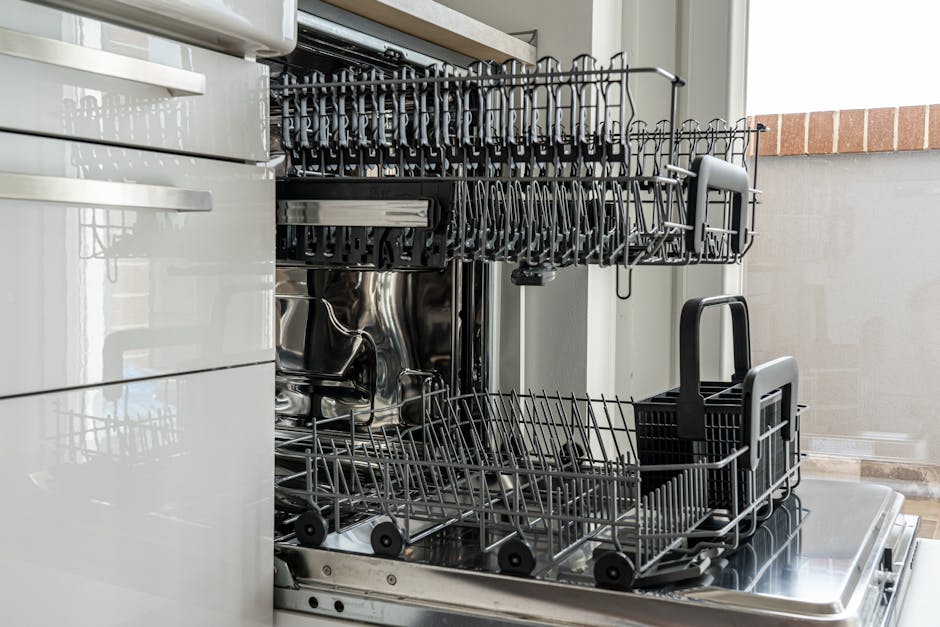
The way you arrange dishes matters more than most people realize. Plates stacked too closely together or bowls nested inside each other block water from reaching all surfaces.
Load plates at an angle so water can spray between them. Don't stack bowls—place them in the basket so spray reaches the inside. Make sure nothing is blocking the spray arms from rotating freely. And don't rinse your dishes before putting them in. A little food helps detergent work, and pre-rinsing is actually unnecessary and can interfere with your machine's sensors.
However, do scrape off large food chunks and grease. Hard food bits can clog the drain hose, damage the filter, or hurt the pump.
When It's a Broken Part
If you've tried all the above and your dishes are still coming out dirty, you might have a broken component inside the machine.
The most likely culprits are a faulty heating element (which prevents water from getting hot enough to clean), a broken soap dispenser (which stops detergent from being released at the right time), or a faulty inlet valve (which controls water flow). A malfunctioning spray arm motor can also stop the arms from rotating.
These are internal repairs that require taking apart the machine and replacing parts. If you're handy, you can find replacement parts and video guides online, but many people prefer to have a professional handle it. Repair costs depend on which part is broken and where you live, but expect to budget for the technician's time plus the cost of the replacement part.
Hard Water Solutions
If hard water is your main problem, there are a few ways to handle it.
Rinse aid is the simplest fix. It's designed specifically to help water drain off dishes and reduces spotting and film. Add it to the rinse aid dispenser in your dishwasher and adjust the setting based on how hard your water is.
You can also use less detergent than the box recommends. Hard water reduces how effective detergent is, but using less can sometimes paradoxically give you better results by preventing residue buildup.
Some people install a whole-house water softener, but that's a bigger investment. If you're considering it, understand that it's a long-term commitment and affects your entire home, not just the dishwasher.
A Quick Maintenance Routine

To keep your dishwasher running well, follow this simple monthly routine:
- Clean the filter cup weekly
- Check spray arm holes for blockages twice a month
- Run a vinegar cycle monthly
- Use the correct amount of detergent every load
This prevents most problems from building up in the first place.
When to Call a Professional
If you've cleaned the filter, checked the spray arms, fixed the detergent amount, and your dishes are still dirty, you likely have an internal mechanical or electrical problem. That's when it's time to contact an appliance repair technician.
A professional can diagnose exactly what's wrong—whether it's the heating element, the inlet valve, the soap dispenser, or something else—and replace the part. They can also check for issues you might not be able to see yourself, like a cracked spray arm or a failing pump.
People Also Ask
Why are my dishes coming out cloudy?
Cloudy dishes are usually caused by hard water mineral deposits or too much detergent. Try using less detergent and add rinse aid to your dishwasher. You can also run a vinegar cycle to dissolve mineral buildup on the dishes and inside the machine.
Should I rinse my dishes before loading the dishwasher?
No, you shouldn't rinse them. A little food helps detergent do its job. Just scrape off large chunks of food and grease to prevent clogging the drain. Pre-rinsing can also interfere with your dishwasher's sensors, which detect how dirty the load is and adjust the cycle accordingly.
Can I use regular dish soap in my dishwasher?
No, never use regular hand dish soap in your dishwasher. It creates too many suds and will overflow all over your kitchen floor. Dishwashers require detergent formulated for automatic machines, which is specifically designed to produce minimal suds and work in that environment.
How often should I clean my dishwasher?
Clean the filter cup weekly. Run a vinegar cleaning cycle monthly. Check and clear the spray arm holes every two weeks or as needed. Regular maintenance prevents most dirty dish problems from happening in the first place.
Common questions
Cloudy dishes are usually caused by hard water mineral deposits or too much detergent. Try using less detergent and add rinse aid to your dishwasher. You can also run a vinegar cycle to dissolve mineral buildup on the dishes and inside the machine.
No, you shouldn't rinse them. A little food helps detergent do its job. Just scrape off large chunks of food and grease to prevent clogging the drain. Pre-rinsing can also interfere with your dishwasher's sensors, which detect how dirty the load is and adjust the cycle accordingly.
No, never use regular hand dish soap in your dishwasher. It creates too many suds and will overflow all over your kitchen floor. Dishwashers require detergent formulated for automatic machines, which is specifically designed to produce minimal suds and work in that environment.
Clean the filter cup weekly. Run a vinegar cleaning cycle monthly. Check and clear the spray arm holes every two weeks or as needed. Regular maintenance prevents most dirty dish problems from happening in the first place.