How to Choose a Paint Color for a Room: A Practical Guide
Learn how to pick the right paint color for any room. Test samples in your space, consider lighting, and narrow down options using this step-by-step approach.
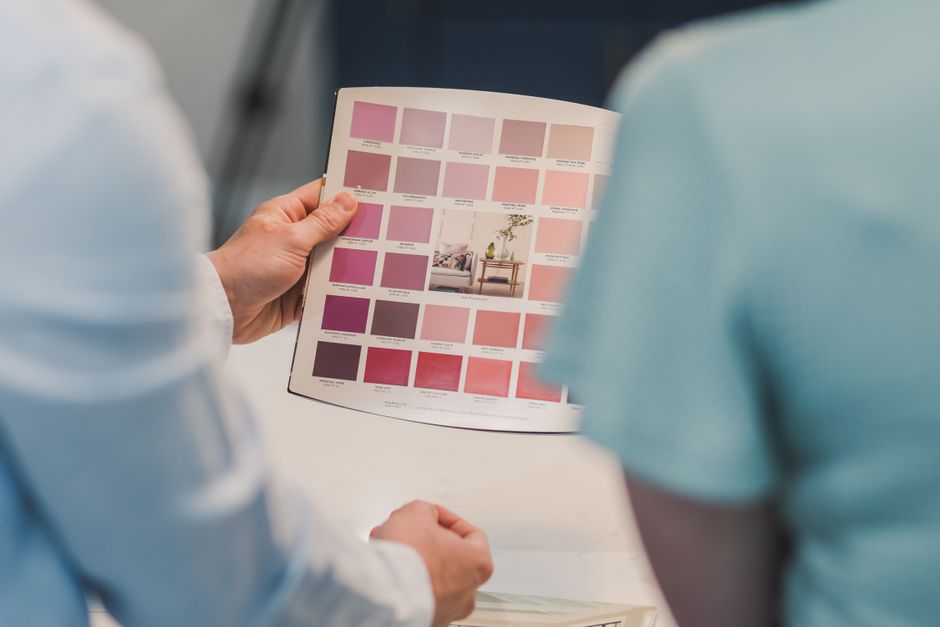
Picking a paint color for a room is one of those decisions that feels simple until you're standing in front of 50 shades of off-white and wondering if your choice will make the space feel cozy or cave-like. The good news: there's a straightforward process that takes the guesswork out of how to choose a paint color for a room.
The key is to start broad, test thoroughly in your actual space, and pay attention to how light moves through the room. You're not trying to pick the "perfect" color from a paint chip the size of a postage stamp. You're finding a color that works in your home, with your furniture, and under your specific lighting conditions.
Start With 15 Color Options, Not 3
Most people make the mistake of narrowing down too quickly. They pick three colors they like and then agonize over which one is "right." That's backward.
Instead, go to a paint store and grab paint chips for roughly 15 colors that appeal to you. Don't overthink this step. If you like it, take it. Include a mix of options: some warm neutrals, some cool neutrals, maybe one or two colors outside your comfort zone. You're casting a wide net at this stage, not making the final call.
The reason this works is simple: you'll eliminate options quickly once you see them in context. What looked promising on the shelf often looks wrong when you get it home. And colors you didn't expect sometimes work perfectly once you see them under your room's actual lighting.
Test Colors in Your Actual Room
This is the non-negotiable step. You must see paint samples in the room where you'll actually use them. Not in your car, not at the store, not in a different room with different windows.
Paint a large section of your wall with each color you're considering. We're talking at least a 2-foot square, ideally larger. Many paint stores sell sample sizes specifically for this purpose, or you can buy a small quart and test multiple colors on different walls.
Leave the samples up for a few days. Check them at different times of day: morning, afternoon, and evening. Watch how they look when sunlight streams in from the windows versus when you've got the lights on. A color that looks warm and welcoming at 3 p.m. might feel totally different at 8 p.m.
This is where most of the work happens, and there's no shortcut. Paint color changes based on the light in your room, the colors of nearby furniture, and your own perception at different times of day.
Pay Attention to Your Room's Light
Natural light is the biggest factor that affects how a paint color will look. A room with bright south-facing windows will make colors pop differently than a north-facing room with softer, cooler light.
If your room gets a lot of natural light, cooler tones and lighter shades will feel fresh and open. If your room is naturally darker, warmer neutrals often feel more inviting than cool colors, which can make a dim space feel even more dim.
Don't forget about artificial light either. The type of lightbulbs you use matters. Warm white bulbs will make colors feel cozier, while cool white or daylight bulbs will make them feel crisper and more clinical. If you're planning to change your lighting setup, do that before you commit to a paint color.
Look at What You Already Have

Your furniture, artwork, rugs, and other existing pieces in the room are your best source of inspiration. A paint color doesn't exist in a vacuum. It sits next to your couch, your curtains, your family photos.
If you have a rug you love or artwork on the wall, use that as your starting point. Pull colors from those existing items when you're choosing your paint chips. This creates a cohesive look without you having to think too hard about what "goes together."
Similarly, if you're planning to repaint and replace furniture down the line, that's fine, but for right now, the colors in your space are your guide.
Related: Should You Repair or Replace an Appliance? A Practical Guide
Related: How to Paint Over Dark Walls: A Step-by-Step Guide
Warm Neutrals Are Forgiving
If you're stuck between options, warm neutral tones are a solid choice for most rooms. Soft whites, greiges (that gray-beige blend), and warm off-whites work in almost any lighting condition and pair well with almost any furniture color.
Warm neutrals won't make a statement, but they also won't make you regret your choice in six months. They give you flexibility if you want to change your furniture or decor later. Think of them as the reliable background that lets everything else in your room shine.
Cooler neutrals and more saturated colors can be beautiful, but they're pickier about light and furnishings. If you go that route, make extra sure you've tested them properly.
Factor in Room Size
The size of your space does affect how colors appear. Larger rooms can handle darker colors or bolder hues without feeling cramped. Smaller rooms often feel more spacious and airy with lighter colors, though a well-chosen darker color can make a small room feel intimate rather than claustrophobic if the lighting is right.
This isn't a hard rule, but it's worth keeping in mind when you're looking at your paint samples. Stand in your actual room and imagine how a color will feel on all four walls, especially if the color is darker or more saturated.
Narrow Down Your Samples

After a few days of observing your paint samples under different lighting, you should naturally be drawn to two or three favorites. The colors that looked obviously wrong will have eliminated themselves. The colors that feel "fine" will fade into the background.
You're looking for the one that makes you feel the way you want to feel in that room. Do you want it to feel energized, calm, warm, or open? Let that guide your final choice. When you land on a color that you look at and think "yes, that's it," that's usually the right answer. Trust that instinct.
If you're still torn between two, live with both on your wall for another day or two. Use the room normally. Cook in the kitchen. Read in the bedroom. Watch how you feel in the space. One will eventually feel more right than the other.
Common Mistakes to Avoid
Don't rely entirely on paint chips or color swatches. They're too small and don't show you how a color will feel on a full wall. Don't skip the testing step just because you like a color in theory. And don't pick a color based solely on how it looks in a picture or on your phone. Every space is different.
Also, don't assume that a color that worked in a friend's house will work in yours. Their lighting, furniture, and wall dimensions are different from yours. You have to test in your own space.
Common questions
Start with around 15, then narrow down to your top 3 or 4 after observing them in your room for a few days. Testing too many at once gets confusing, but starting with more options gives you a better chance of finding one that truly works for your space.
Paint can be repainted. It's not permanent. The cost of repainting is the same as the original paint job (labor and materials vary based on room size, wall condition, and regional rates), but if you followed the testing process, you shouldn't end up in this position. The testing step exists specifically to prevent that regret.
White is versatile, but "white" comes in many versions. Cool whites can feel stark and clinical in rooms with dim lighting. Warm whites and off-whites are usually more forgiving. Test the specific shade of white in your room before committing, especially if your room doesn't get much natural light.
Yes, absolutely. An accent wall or multiple colors can work beautifully if they're chosen carefully and work with your lighting and furnishings. Use the same testing process for each color, and think about how they'll interact with each other across your space.