How Short Should You Cut Your Grass: A Simple Guide
Cut grass 2-3 inches high for most lawns. Follow the 1/3 rule to avoid stress and keep your lawn healthy. Learn the right mowing height for your grass type.

The answer is simple: most lawns should be cut between 2 and 3 inches tall. That's the sweet spot for a healthy, attractive lawn that doesn't stress out from mowing.
But the exact height depends on a few things, like whether your grass is a cool-season or warm-season type, and how fast it grows between mowings. Let's walk through what matters and how to find the right height for your lawn.
The 1/3 Rule: The Golden Rule of Grass Cutting
Before you pick a height, understand this rule: never cut off more than one-third of the grass blade in a single mowing.
So if you mow at 3 inches, your grass should reach about 4.5 inches before you mow again. If you mow at 2.5 inches, let it grow to around 3.75 inches. This protects your grass from shock and keeps the lawn healthy.
Related: Should You Repair or Replace an Appliance? A Practical Guide
Why does this matter? Cutting too much at once stresses the grass, weakens its root system, and makes it more vulnerable to weeds and disease. Following the 1/3 rule also means you can mow less often, which saves time and gas.
Related: How Often to Replace HVAC Air Filter: A Simple Guide
Related: How Often Should You Water Your Lawn? A Seasonal Guide
If you find yourself mowing more than once a week or struggling to follow the 1/3 rule, your lawn is telling you to either cut at a slightly lower height or mow on a stricter schedule.
Recommended Heights by Grass Type
Your grass type is the biggest factor in choosing the right cutting height.
Cool-Season Grasses (Most Common in Northern US)
If you live in the North and your grass goes dormant in winter, you likely have cool-season grass. Examples include Kentucky bluegrass, perennial ryegrass, and tall fescue.
Keep cool-season grass between 2.5 and 4 inches tall. Most homeowners find 2.5 to 3 inches works best. This height gives your grass a full, neat appearance and develops a deeper root system that handles heat and drought better.
Warm-Season Grasses (Most Common in Southern US)
If your lawn stays green year-round and browns out in winter, you have warm-season grass. Bermuda, zoysia, and St. Augustine grass are common warm-season varieties.
Keep warm-season grass between 1 and 3.75 inches, depending on the exact type. Bermuda and zoysia tolerate lower cuts and look crisp around 1.5 to 2 inches. St. Augustine prefers staying a bit taller at 2.5 to 3.75 inches.
Why Mowing Height Matters for Your Lawn's Health
Cutting height affects way more than just how your lawn looks.
Taller grass develops deeper, stronger roots. Those roots reach more water and nutrients in the soil, making your lawn tougher during dry spells. Taller grass also shades the soil, which keeps weeds from sprouting as easily. You'll spend less time pulling weeds and less money on weed control if you keep your grass a little taller.
Shorter cuts create bare spots and scalping (where you expose soil or strip off the leaf blade). This invites weeds and makes disease easier to establish. Your lawn recovers more slowly from foot traffic and stress.
That said, if your lawn is overgrown and wild, you don't mow it short in one go. Use the 1/3 rule and bring it down gradually over two or three mowings. Patience pays off.
Adjusting Height Through the Growing Season
You don't have to cut at exactly the same height all year. Smart homeowners adjust slightly based on the season and growing conditions.
In spring, when grass is growing fast, you might cut at the lower end of your range (2 inches for cool-season grass) to keep up. In summer, when heat stresses grass, move toward the higher end (3 to 3.5 inches) to protect it. In fall, as things cool down and growth slows, you can lower the height again.
During a drought or heat wave, let your lawn grow taller. That extra leaf surface protects the soil and reduces stress. When you have a wet spring and grass is growing like crazy, you might mow more often at a slightly lower height to stay on top of things without violating the 1/3 rule.
How to Set Your Mower to the Right Height
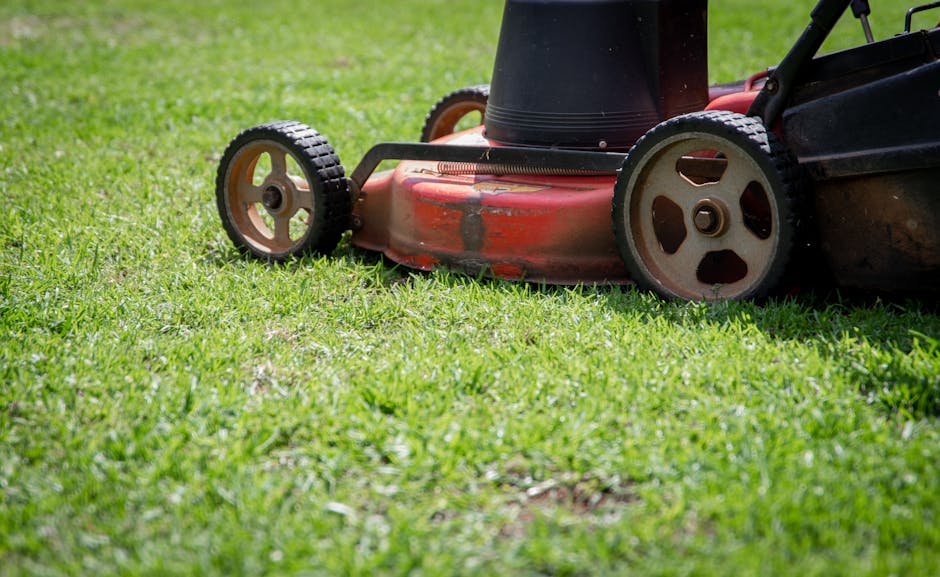
Most rotary mowers have a lever on each wheel that adjusts the deck height. Some have a single lever that raises or lowers all four wheels at once.
Set all four wheels to the same height. If your mower cuts unevenly, you'll get a wavy, scalped lawn. Check your mower's manual or the labels on the deck to see which setting matches your target height in inches.
Before you mow, measure the grass with a ruler to know how tall it actually is. A lot of homeowners guess and are usually wrong. Spend 30 seconds with a ruler and you'll know exactly where you stand.
Common Cutting Height Mistakes
Cutting too short is the number one mistake. Homeowners think a short, scalped lawn looks neater, but it actually looks stressed and invites weeds. Short lawns also need more water and fertilizer to stay healthy.
Mowing on a random schedule is another big one. If you mow whenever you feel like it, sometimes you'll cut too much off at once and violate the 1/3 rule. Set a weekly or twice-weekly schedule during the growing season and stick to it.
Letting your mower blade get dull is a silent killer. A dull blade tears grass instead of cutting it cleanly, which stresses the plant and makes brown-tip damage visible. Sharpen your blade at least twice per season, or more often if you mow frequently.
Not keeping all four wheels at the same height causes uneven cutting. An uneven deck scalps the high spots and leaves longer grass on the low spots. Take five minutes to level your mower before the season starts.
Mowing Frequency and the Growth Cycle
If you cut at 3 inches, expect to mow about once a week during peak growing season (spring and early summer). Your grass will grow to around 5 or 6 inches between mowings, then drop back down to 3 inches.
If you cut at 2.5 inches, you might mow slightly more often, maybe every 5 to 7 days, depending on how fast your grass grows.
The key is keeping that 1/3 rule in mind. Faster-growing grass means more frequent mowing. Slower-growing grass (like in summer heat or fall) means you can stretch it out longer between cuts.
Special Situations
Newly seeded lawns: Wait until grass is at least 3 to 4 inches tall before the first mow, then follow the 1/3 rule from there on.
Shaded areas: Grass in shade grows slower and often looks thinner. Keep shaded grass slightly taller (up to half an inch more) to help it compete for light.
High-traffic areas: Paths and play zones take a beating. Let these areas grow slightly taller to handle wear and tear better.
Dormant season: In late fall, you can lower your cut slightly as cool-season grass slows down. This helps prevent snow mold. For warm-season grass, stop mowing when growth truly stops in late fall or early winter.
When to Call a Professional
Most homeowners can handle lawn mowing on their own once they understand the basics. But if your lawn is severely overgrown, compacted, weedy, or diseased, a landscaper can assess it and offer solutions beyond just cutting height.
If you're not sure what type of grass you have, many local cooperative extension offices can identify it from a small sample. That's free or very low-cost and gives you the exact information you need to set your mower correctly.
What height should I cut my grass if I want it to look formal and manicured?
If you like a neat, formal appearance, cut at the lower end of your range: 2 to 2.5 inches for cool-season grass, or 1.5 to 2 inches for warm-season grass. You'll mow more often (sometimes twice a week in spring) to stay on top of the 1/3 rule, but the result is a polished look. Just know that shorter cuts stress the grass slightly and require more water, fertilizer, and weed control.
Can I mow my grass really short and then not mow for a few weeks?
No. Cutting too short and then letting it grow long violates the 1/3 rule in reverse. Your grass suffers stress, gets scalped, and can go dormant or thin out. A consistent mowing schedule with gradual height reduction is always better than boom-and-bust cutting.
Does mowing height affect how often I need to water?
Yes. Taller grass shades the soil better and reduces evaporation, so it needs less frequent watering than short grass. If you cut short, you'll need to water more often or see dry, stressed patches. Taller grass is more drought-tolerant.
What if different parts of my lawn grow at different rates?
This is common. Shaded areas grow slower than sunny spots. Low-lying spots that stay wetter grow faster than dry knolls. You can either set your mower to accommodate the fastest-growing areas (and follow the 1/3 rule strictly), or you can spot-mow the fast-growing areas between regular mowings. Most homeowners just mow the whole lawn once a week and don't worry about minor variation.
Common questions
If you like a neat, formal appearance, cut at the lower end of your range: 2 to 2.5 inches for cool-season grass, or 1.5 to 2 inches for warm-season grass. You'll mow more often (sometimes twice a week in spring) to stay on top of the 1/3 rule, but the result is a polished look. Just know that shorter cuts stress the grass slightly and require more water, fertilizer, and weed control.
No. Cutting too short and then letting it grow long violates the 1/3 rule in reverse. Your grass suffers stress, gets scalped, and can go dormant or thin out. A consistent mowing schedule with gradual height reduction is always better than boom-and-bust cutting.
Yes. Taller grass shades the soil better and reduces evaporation, so it needs less frequent watering than short grass. If you cut short, you'll need to water more often or see dry, stressed patches. Taller grass is more drought-tolerant.
This is common. Shaded areas grow slower than sunny spots. Low-lying spots that stay wetter grow faster than dry knolls. You can either set your mower to accommodate the fastest-growing areas (and follow the 1/3 rule strictly), or you can spot-mow the fast-growing areas between regular mowings. Most homeowners just mow the whole lawn once a week and don't worry about minor variation.