AC Maintenance: What You Should Do Yourself
AC maintenance keeps your unit running efficiently and extends its life. Learn which tasks you can do yourself and when to call a pro.

AC maintenance is one of those home tasks that pays for itself. Regular upkeep keeps your air conditioner running smoothly, helps it use less energy, and can add years to its lifespan. The good news is that many maintenance steps are simple enough to handle on your own, without calling a technician.
Whether you are preparing for summer, wrapping up the cooling season, or just keeping your unit in shape, here is what you need to know about staying on top of AC maintenance.
Related: How Short Should You Cut Your Grass: A Simple Guide
Related: Should You Repair or Replace an Appliance? A Practical Guide
Why AC Maintenance Matters
An air conditioner that is not maintained will work harder to cool your home. That means higher energy bills, weaker cooling, and a shorter lifespan for the unit. Over time, dirt builds up, filters clog, and small issues snowball into expensive repairs.
When you stay on top of AC maintenance, your unit stays efficient, reliable, and ready to do its job without breaking down in the middle of a heat wave.
Filter Replacement: The Most Important Task
Your AC filter is the easiest and most impactful maintenance job you can do yourself. A clogged filter makes your unit work harder, wastes energy, and eventually damages the system.
Check your filter every month during cooling season. If it looks dusty or discolored, it is time to replace it. Most homeowners need to swap out their filter every one to three months, depending on dust levels, pets, and air quality in your home.
Filters are inexpensive and widely available at hardware stores and online. They come in standard sizes that fit most systems, so measure your current filter first to get the right dimensions. Replacement takes just a few minutes and requires no tools.
Clean the Outdoor Unit
Your air conditioner has an outdoor component (the condenser unit) that sheds dust, debris, and leaves throughout the year. A dirty condenser forces your AC to work harder and reduces cooling power.
Turn off the unit before you start. Then use a soft brush or vacuum with a brush attachment to gently remove debris from the fins and coils. You can also rinse the unit with a garden hose on low pressure, but avoid high-pressure washers, which can bend the delicate fins.
Do this at least once a year, ideally in spring before you run the AC heavily. If you live near trees or in a dusty area, clean it more often.
Inspect Window Seals and Weatherstripping
Even a well-maintained AC unit will struggle if cool air leaks out of your windows and doors. Check the seals and weatherstripping around windows and any external doors.
Look for gaps, cracks, or areas where the seal has peeled away. If you find damage, you can buy adhesive-backed weatherstripping at any hardware store and apply it yourself. For larger gaps or broken seals, you may need to recaulk around the window frame or call a professional.
Check Refrigerant Lines
The lines that carry refrigerant from your indoor unit to the outdoor condenser should be wrapped in insulation. Over time, this insulation can crack, wear away, or get damaged.
Inspect the lines where they run outside and where they enter your home. If the insulation is missing or damaged, you can wrap the lines with foam pipe insulation sleeves, available at hardware stores. This is a quick DIY fix that improves efficiency and protects the lines.
However, if you suspect a refrigerant leak (you might notice a hissing sound, reduced cooling, or ice forming on the unit), do not try to fix it yourself. Refrigerant handling requires a licensed professional and special equipment.
Set Your Thermostat Wisely
How you run your thermostat is part of maintenance too. Programmable and smart thermostats let you adjust temperatures automatically, so you are not cooling your home when nobody is there.
During the day when you are away, raising the temperature by a few degrees cuts energy use without much comfort loss. The same goes for nighttime. Even small adjustments add up over weeks and months.
Inspect for General Wear and Tear

Walk around your indoor and outdoor units and look for anything unusual. Check for strange noises, leaks, visible rust, or bent fins on the condenser.
If you notice ice buildup on the indoor or outdoor unit, that is a sign something is wrong and you should turn the system off and call a technician. Same if you see water pooling around the indoor unit or the air feels less cool than normal.
End-of-Season Maintenance
Before you stop using your AC for the season (usually in fall), run through a checklist. Clean the outdoor unit one last time, replace the filter, and make sure everything looks clean and dry.
If your unit has a winterization mode or cover, check your manual to see if you should use it. Some systems benefit from being shut down and protected over the winter. Others can run year-round without issue.
A professional technician can also do a thorough end-of-season inspection if you want to be extra sure everything is ready for next year.
When to Call a Professional
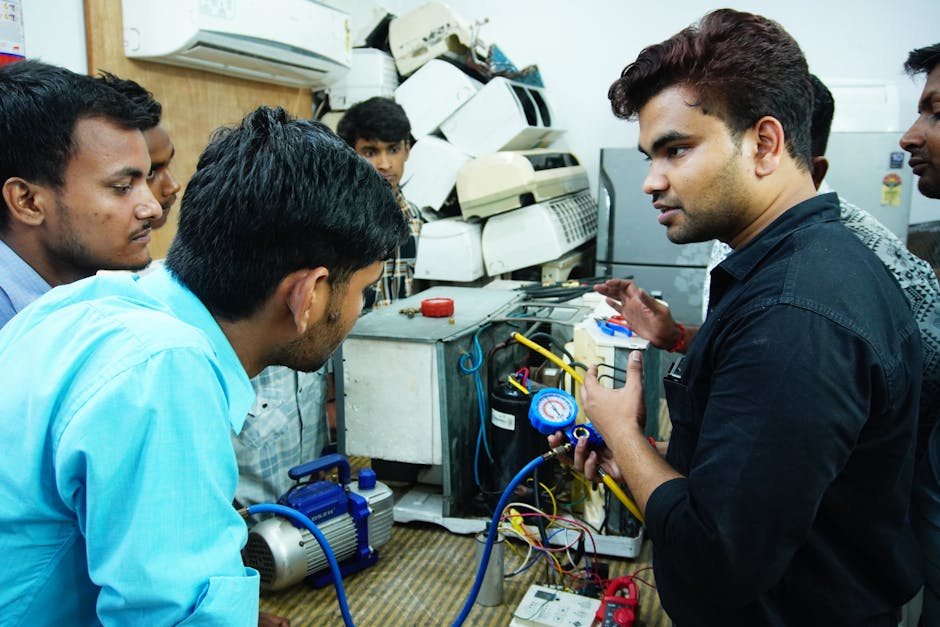
Some AC maintenance tasks require a licensed HVAC technician. Do not attempt these yourself.
- Refrigerant refills or leak repairs
- Electrical work or wiring issues
- Compressor problems or replacement
- Coil cleaning or replacement
- Ductwork repairs or sealing
A professional tune-up once a year (usually in spring) is a smart investment. A technician will check refrigerant levels, test electrical connections, clean internal coils, and spot problems early.
The cost of a professional AC inspection and maintenance visit varies widely depending on where you live, the type of unit, and what services are included. Get quotes from a few licensed technicians in your area to understand the typical range.
Make a Maintenance Schedule
The easiest way to stay on top of AC maintenance is to write it down. Mark your calendar for monthly filter checks during cooling season, spring cleaning of the outdoor unit, and a professional tune-up before summer starts.
If you are renting and your landlord handles maintenance, ask for a maintenance schedule in writing. If you own your home, create your own routine so nothing gets forgotten.
DIY Maintenance vs. Professional Service
The tasks you can do yourself save money and keep your AC running smoothly. Filter changes, outdoor cleaning, weatherstripping, and visual inspections are all fair game for homeowners.
Professional service handles the technical and specialized work that requires training, tools, and certification. Knowing the difference helps you decide when to grab a wrench and when to pick up the phone.
How often should I replace my AC filter?
Most homeowners replace their filter every one to three months during cooling season. If you have pets, allergies, or live in a dusty area, check and replace more frequently. If you live alone in a clean home, you might get three months or longer between changes. Check the filter monthly to be sure.
Can I clean my AC condenser myself?
Yes. Turn off the unit, use a soft brush or vacuum to remove debris from the fins, and rinse gently with a garden hose on low pressure. Avoid high-pressure sprays, which can damage the fins. Clean it at least once a year, ideally in spring.
What does it mean if my AC unit is leaking water?
A small amount of water dripping from the indoor unit is normal, but pooling water or water leaking indoors suggests a clogged or frozen drain line. Turn off the system and call a technician. This is not a DIY fix.
Should I cover my AC unit in winter?
Check your owner's manual. Many modern units are designed to handle winter weather and do not need a cover. Covers can trap moisture and encourage rust. If you do cover the unit, use a light, breathable cover and remove it before spring cooling season starts.
Common questions
Most homeowners replace their filter every one to three months during cooling season. If you have pets, allergies, or live in a dusty area, check and replace more frequently. If you live alone in a clean home, you might get three months or longer between changes. Check the filter monthly to be sure.
Yes. Turn off the unit, use a soft brush or vacuum to remove debris from the fins, and rinse gently with a garden hose on low pressure. Avoid high-pressure sprays, which can damage the fins. Clean it at least once a year, ideally in spring.
A small amount of water dripping from the indoor unit is normal, but pooling water or water leaking indoors suggests a clogged or frozen drain line. Turn off the system and call a technician. This is not a DIY fix.
Check your owner's manual. Many modern units are designed to handle winter weather and do not need a cover. Covers can trap moisture and encourage rust. If you do cover the unit, use a light, breathable cover and remove it before spring cooling season starts.